
Baton Rouge Lookup Record Map
Every official source answers one narrow question, and knowing that limit prevents most confusion. The East Baton Rouge Parish Assessor links a tax owner to a parcel. Yet the mailing address on that account may not be the owner's home. The Louisiana voter portal confirms a registration when the entered details line up. Clerk records prove only one thing. Someone took part in a case or signed a recorded instrument. Vital records confirm an event, and only for requesters who meet state access rules.
| Record | What It Confirms | Where | Access |
|---|---|---|---|
| Property assessment | Owner, parcel, tax mailing clue | Parish Assessor | Portal and office |
| Voter registration | Matching registration and electoral area | Secretary of State | Name, address, or parish search |
| Court and probate | Party, case number, filing trail | Parish Clerk | Subscription or free counter inspection |
| Birth and death | Certified event facts | Department of Health | Eligibility, ID, and fee |
| Business or license | Public role, entity, or credential | State or licensing board | Online, board-specific |
This map is where the inquiry begins. It does not promise that every Baton Rouge resident appears in every source. Record the date and the role each entry assigns.
Baton Rouge Two-Anchor Check
Shared names cause the costliest mistakes. Open with one strong anchor. Use a known ZIP code, birth year, parcel address, business name, or court case number. Then hunt for a second record created for a different public purpose entirely. Two documents that merely repeat the same mailing address are not independent proof of anything.
- Write the full name, alternate spelling, suffix, and one known date or place.
- Check the assessor or voter portal for a local address lead. Save the date and exact spelling.
- Search Clerk, business, or license indexes with the same variants. Compare roles, dates, and parish.
- Request the underlying image or certified copy when a fact must carry legal weight.
A namesake living one parish over is still a different person. An old Baton Rouge address never proves where someone lives today. The two-anchor method exposes doubt instead of forcing a weak match to look solid.
Note: A tax mailing address may belong to an owner, agent, or office, so do not call it a residence without other support.
Baton Rouge Voter Lookup Fields
The Louisiana Secretary of State Voter Portal offers separate voter, address, and parish search routes. Its name screen takes first and last name. ZIP and birth month and year serve as narrowing facts. The address route wants a ZIP, street address, apartment or lot, and city. A nonmatch can stem from spelling, an updated registration, protected status, or a postal-city mismatch.
| Screen | Fields | Best use |
|---|---|---|
| Voter name | First, last, ZIP, birth month/year | Separate same-name residents |
| Address | ZIP, address, apt/lot, city | Check one exact address |
| Parish | Louisiana parish | Confirm election jurisdiction |
A registration may carry precinct and district context. Ballot choices stay private forever. Louisiana R.S. 18:154 shields sensitive identity fields and certain voters from view. Treat the portal as a narrow confirmation tool, not a household census.
Confirming Baton Rouge Court Names
The ClerkConnect civil inquiry and criminal inquiry are subscription routes for East Baton Rouge Parish. Both public screens stop at a login wall. No search form appears before signing in. A Baton Rouge resident lookup can still shift to free inspection at the Clerk counter, where staff run name or case-number checks. The criminal inquiry page itself displays that access boundary.
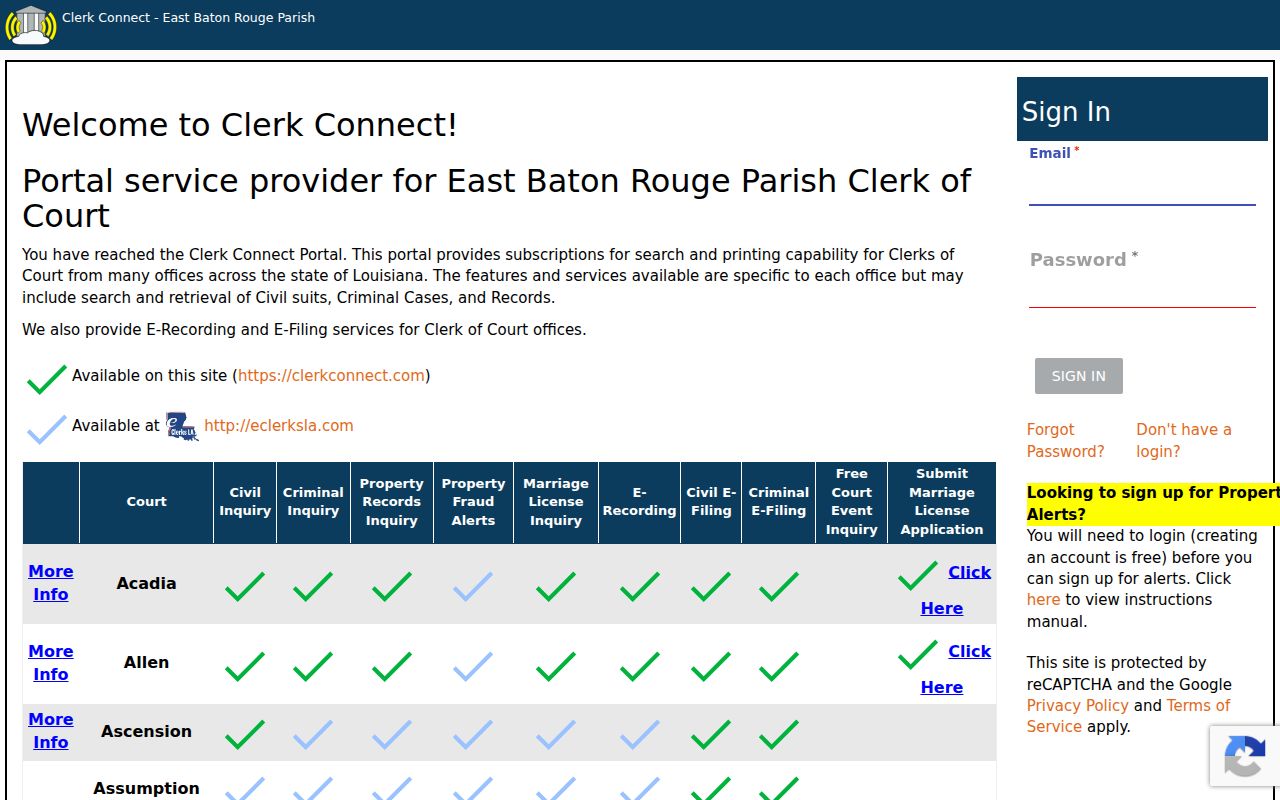
That login wall explains why a lookup often moves from the web to free review at the counter during regular Clerk hours. Ordinary copies cost $1 per page. Ask the Copy Department about current certification fees.
Copy the case number, caption, party role, division, filing date, case type, docket events, judgment or disposition, and any image access. Read the disposition before concluding anything. Juvenile, adoption, sealed, and expunged material may never surface. Federal matters go through PACER at the Middle District of Louisiana instead.
Baton Rouge Vital Record Rules
Louisiana seals birth records for 100 years. Death records stay closed for 50 years from the event. The Department of Health takes eligible requests in person. It also accepts mail and its authorized remote vendor. Mail requests run about eight to ten weeks. Records older than those windows transfer to the State Archives as open material.
The East Baton Rouge Parish Clerk adds a walk-in option at Downtown City Hall. It covers certain birth copies and death certificates from June 2012 forward. Older deaths belong to the state office. Marriage books sit with Clerk Public Service. A certified divorce judgment comes from the clerk of the parish where the divorce happened. No general public-record request opens a closed record.
- Docket
- The dated list of filings and events in a court case.
- Index versus image
- An index points to a record; an image shows the filed document.
- Certified copy
- A custodian-issued copy marked as an official reproduction.
Baton Rouge Affiliation Checks
A public business role can separate two people who share one name. The Louisiana Commercial Search runs entity, charter or trade, name-reservation, and officer or agent modes. Results can include status, filing date, number, agent, officers, organizers, and a business mailing address. Those facts establish an affiliation. They do not establish a home. The site's search tabs and officer-agent fields are visible on its main page.
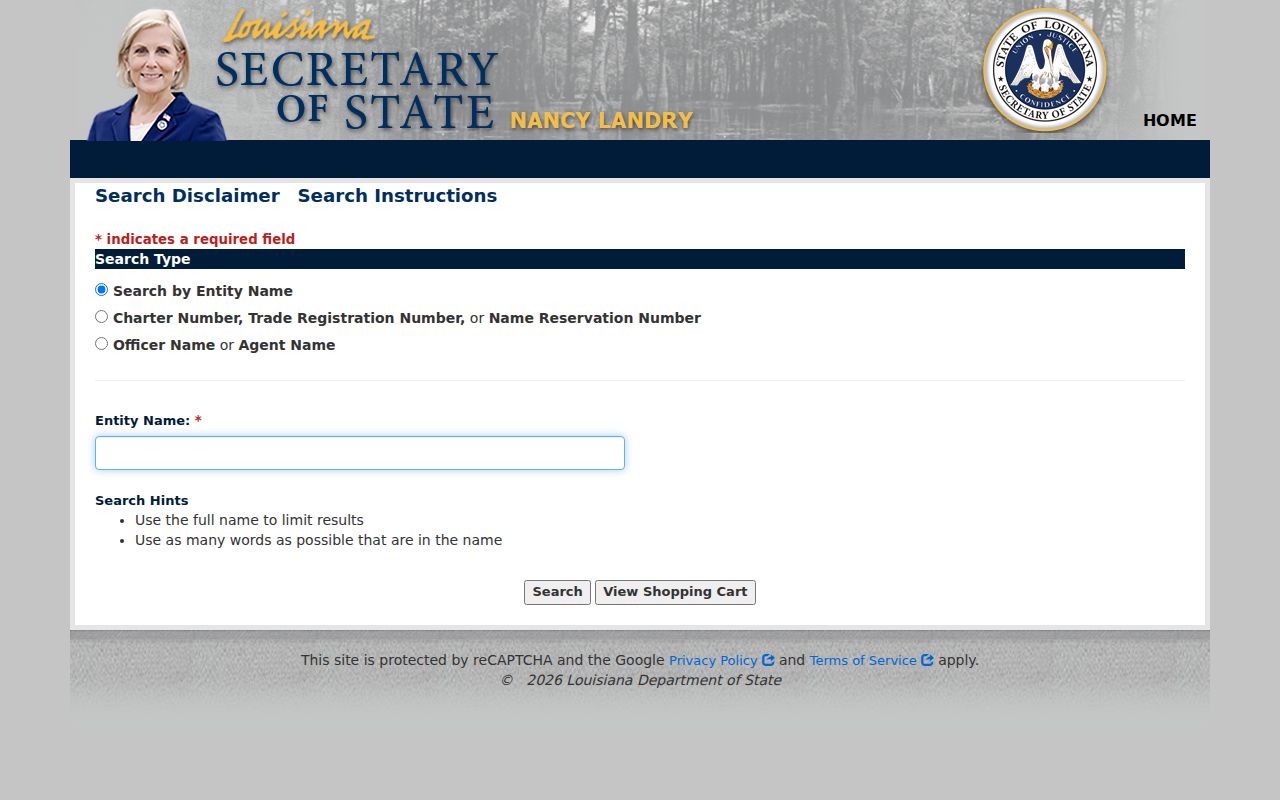
Weigh the filing date and status against another Baton Rouge record. A dissolved firm can still anchor an earlier identity. The Louisiana license directory points to each issuing board.
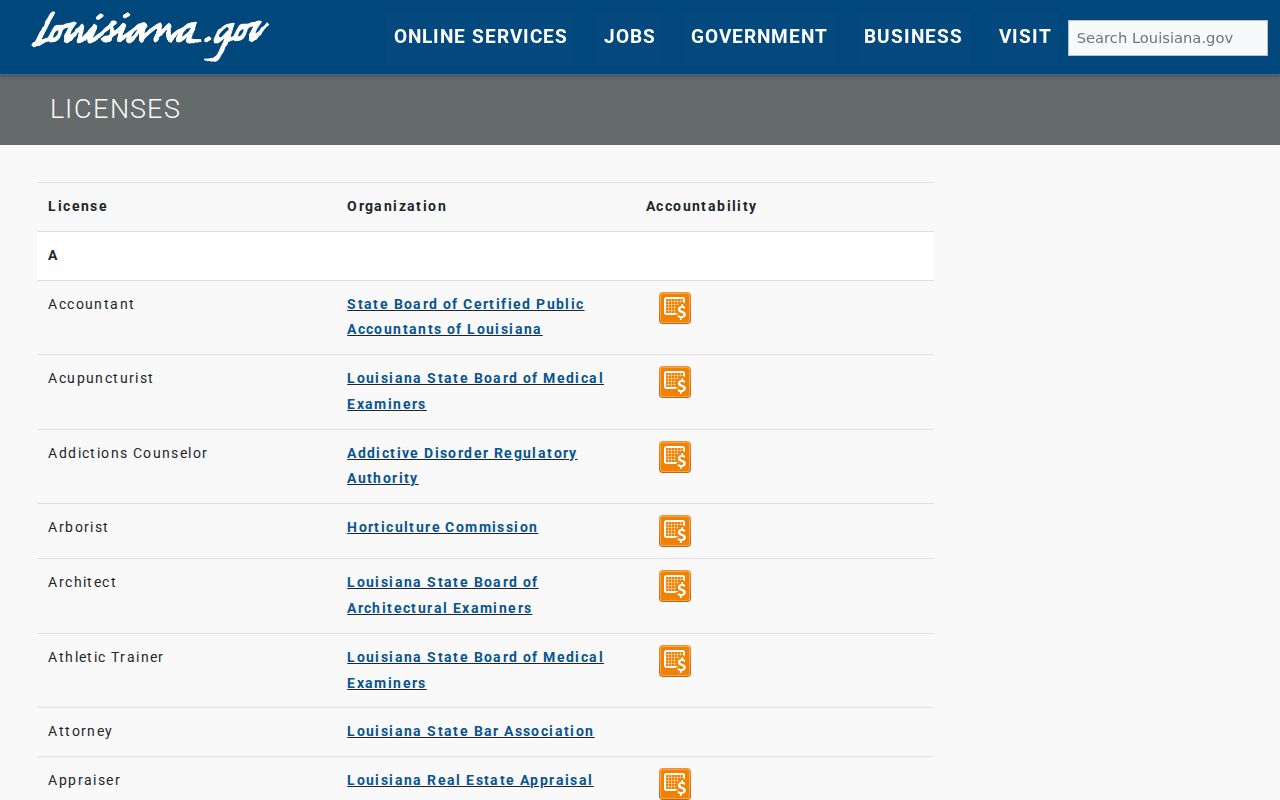
Boards collect different fields. Check name, credential number, type, status, dates, and any public action data with the issuer itself. Even so, an office address never proves residence.
Baton Rouge Family Search Routes
Probate is the strongest route for a Baton Rouge heir. A succession file may name the decedent, executor, heirs, counsel, and property. Match names to a legal description or a later deed. An obituary then adds family context. The Clerk sends newer probate files to the courthouse. Intermediate ranges go to City Hall. The oldest files go to Archives.
Adult adoptees and eligible birth relatives follow a different path. Louisiana's Adoption Reunion Voluntary Registry works by mutual consent. It is not a public locator. Sealed records and eligibility rules still govern it. For a lost classmate, dated yearbooks and newspapers help. The East Baton Rouge Parish Library obituary indexes beat guessing at a current address.
Note: Obituary family links are leads; probate or vital records give stronger official confirmation.
When Baton Rouge Search Stops
Not everything sits online. ClerkConnect requires a subscription, older files move among three buildings, and recent vital records stay closed. When a portal fails, contact the custodian with a narrow request naming the person, record type, approximate date, and any known case or parcel number. The Clerk accepts custodian email requests. Public terminals and counter help are also available.
Louisiana's Public Records Law, especially R.S. 44:31 and R.S. 44:32, supports inspection and copying subject to exceptions. Ask what form the response takes. An index entry, an image, a certified copy, and a no-record finding each carry different value. For delayed responses, R.S. 44:35 provides the enforcement framework.
Lawful Baton Rouge Resident Lookup
Louisiana's Address Confidentiality Program gives eligible participants a substitute address. Their physical location stays shielded. Voter protections, sealed files, and closed vital records create proper stops. Driver records and utility accounts add other limits. A missing result does not prove someone left Baton Rouge. It is never a reason to seek protected data elsewhere.
Lawful use. Use a Baton Rouge resident lookup for lawful personal research. Never use a record to stalk, harass, threaten, or expose a protected person.
Corrections belong with the custodian that made the record. Keep the URL, retrieval date, and identifier handy. Showing the office what appears wrong beats copying the error into more searches.
Baton Rouge Resident Record Routing
Older court and probate material needs a building check. The East Baton Rouge Parish Clerk splits storage by case-number range, not by calendar year. Civil files 630,100 and later sit at the courthouse. Civil 586,227 through 630,099 go to City Hall. Earlier civil files live in Archives. Family 178,000 and later stays at the courthouse, 144,000 through 177,999 sits at City Hall, and older family ranges are in Archives. Probate works the same way: 103,000 and later at the courthouse, 80,000 through 102,999 at City Hall, and earlier files in Archives. Give the Clerk a known case number.
A Baton Rouge resident lookup can also run through vital-record channels. Eligible applicants may request Louisiana birth or death certificates from the Department of Health central office, by mail, or through its authorized remote vendor. Participating parish clerks can issue some copies. The East Baton Rouge Clerk offers a local walk-in route at Downtown City Hall. Its death-certificate service starts with June 2012 records. Older deaths go to the New Orleans Vital Records office. Historically open records move to the Louisiana State Archives. The state form requires event details, relationship, applicant contacts, identification, signature, and correct payment. A no-record result may still keep the search fee.
Certified records are not always needed. Start with less restricted sources. The voter form, assessor card, public court index, Secretary of State filing, or issuing license board can anchor a name without exposing a closed certificate. Use the certified-copy channel only when eligibility and the need for official proof are clear. That order keeps the resident lookup focused. It also respects Louisiana confidentiality periods.