
Finding Baton Rouge Residents
Start any Baton Rouge residents directory search from what you already know. An address comes first. Classify its city-parish jurisdiction first. Then pin down the parcel before hunting for names. Working from a name instead? Add a ZIP code, a rough age, a business tie, or an earlier address. Historic addresses need extra care. Keep the subdivision, the lot number, and any former street name intact. These details keep common names from blurring together. They also separate a postal Baton Rouge address from lookalikes in Baker, Central, Zachary, or unincorporated East Baton Rouge Parish.
No official roll counts everyone under one roof. A deed names only the parties to a transfer, not every occupant. A tax mailing address can point to an owner who lives somewhere else entirely. Voter rolls confirm registration, within state limits. They still leave out renters and nonvoters. Treat each match as one clue in a larger identity check, never the whole answer.
- Confirm the municipality with EBRGIS, then save the parcel lot ID and standardized situs address.
- Check the assessor route for the owner of record and keep the tax mailing address separate from the site address.
- Use the Louisiana voter portal with a name or exact address, adding ZIP and birth month or year when known.
- Follow deeds, court files, probate records, or business filings only when they fit the person and purpose.
- Ask the clerk, library, or archive for records that the public web interfaces do not expose.
Baton Rouge Directory Offices
East Baton Rouge Parish keeps most of its record trail in a few linked offices. The Clerk of Court records conveyances and mortgages. It also holds 19th Judicial District Court files, issues marriage licenses, and maintains an archive. Ownership sits elsewhere. The Assessor carries the assessment layer. EBRGIS adds parcel and jurisdiction context. The Louisiana Secretary of State runs the voter search. Read these offices as one records network rather than rival directories. Then carry the full address chain into the Baton Rouge street directory walkthrough.
East Baton Rouge Assessor
222 St. Louis Street, Room 126
Baton Rouge, LA 70802
225-389-3920
Check Baton Rouge Jurisdiction
A Baton Rouge mailing label can mislead you. The EBRGIS jurisdiction lookup settles the question. It classifies an address as Baton Rouge, Baker, Central, Zachary, or unincorporated East Baton Rouge Parish. Enter an address number, a street name, or both. Wildcards work too. Numbered streets take forms such as 1ST and 43RD. SAINT is spelled out for names such as SAINT LOUIS.
Run this check before any residents directory search. It keeps you from knocking on the wrong municipal door. Postal geography and civic geography often diverge. EBRGIS property data, for instance, pairs ZIP 70818 with Central. Wider postal references tie the code to Baton Rouge service. Write down the jurisdiction result, the postal city, and the ZIP as three separate facts. Each one answers a different question in a resident lookup.
- Parcel
- A mapped tract used for assessment and land records.
- Situs address
- The physical address of the parcel, which may differ from an owner's mailing address.
- Index
- A finding aid that points to a document; it is not always the document image.
- Criss-cross directory
- A printed directory arranged by street and address instead of only by surname.
Baton Rouge Property Clues
Two property routes serve the parish. The Assessor's SmartCAMA service is billed as the assessment search. EBRGIS Property Lookup is the other route. It is a free, parish-wide address index. It accepts an address, subdivision, business name, NAICS code, or lot ID. Its detail report prints or saves as CSV, and it may list ZIP, zoning, precinct, council district, school district, subdivision, neighborhood, and land-use fields. For ownership questions, start with the Assessor property interface.
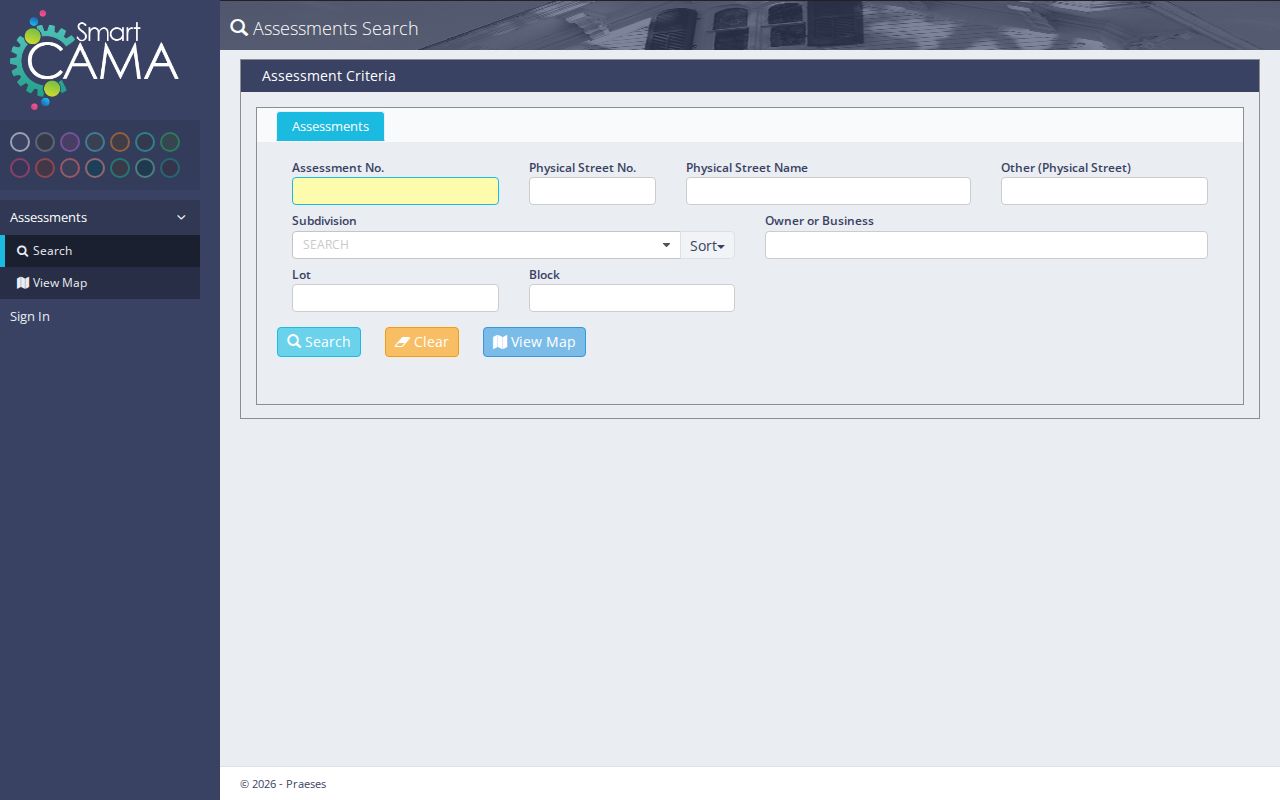
The official Assessor route is the right starting point. A researcher should never assume what an owner field will hold before opening it. Screen trouble is no obstacle. Call the Assessor or visit its downtown, Coursey, or Central office instead. Ask for the current tax card. Then record the owner, the situs address, and the tax mailing address as three separate notes.
Confirm Baton Rouge Voter Records
Louisiana's voter portal opens three doors: name, address, and parish. The name form asks for first name, last name, ZIP code, birth month, and birth year. Its address form wants the ZIP, street address, apartment or lot, and city. A tight match on several of those fields can support identity and address research. Still, treat it as registration evidence only. Louisiana R.S. 18:154 limits how voter records may be handled. Protected voters and Address Confidentiality Program participants may never expose a residential address.
| Field | Use in a Baton Rouge search |
|---|---|
| First and last name | Required identity terms on the name route |
| ZIP code | Narrows common names without proving city limits |
| Birth month and year | Separates people who share a name |
| Address and apt/lot | Checks registration tied to one exact location |
The official voter name form shows those identity fields.
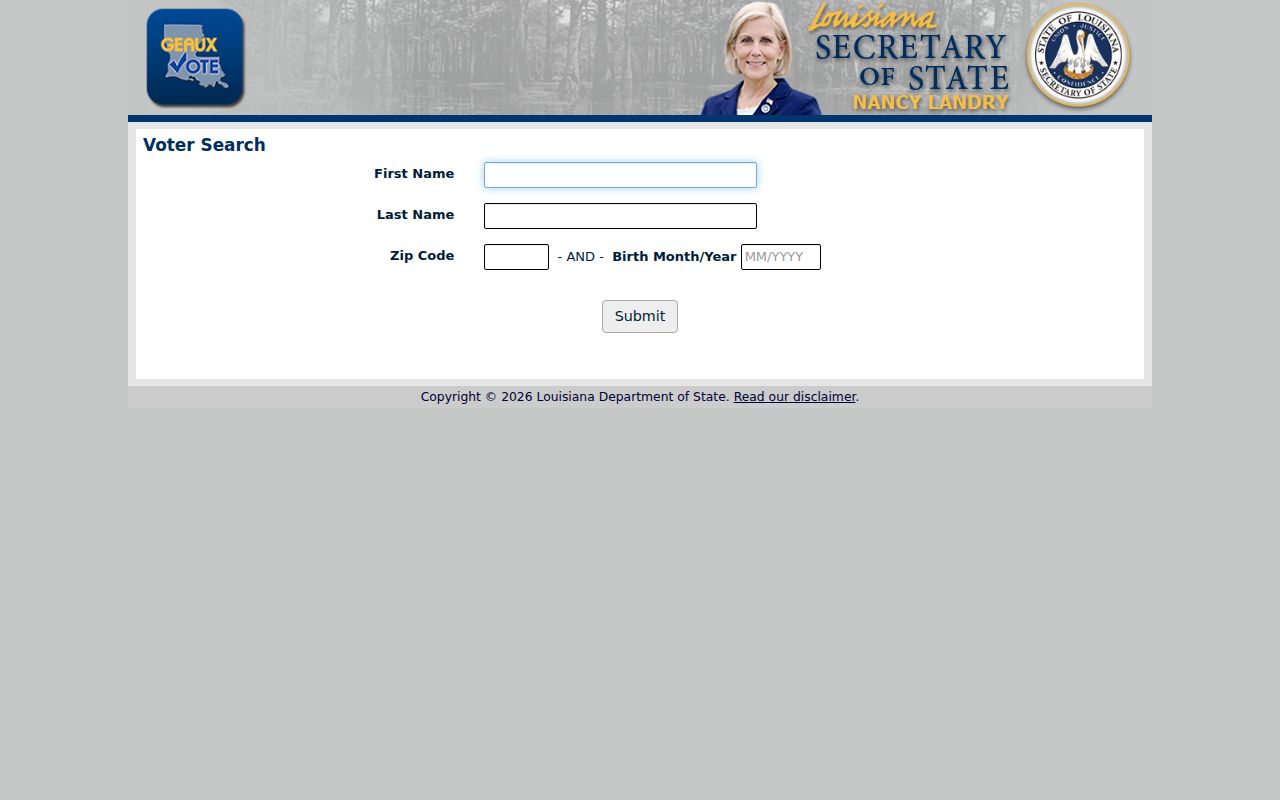
Use the added date and ZIP fields to cut down false matches. Never infer party choice, household membership, or present occupancy from one registration result.
Current Baton Rouge Directory Sources
A current Baton Rouge residents directory has to be pieced together. The records come with different scopes. Property tools track land and owners. The voter portal tracks registration. Clerk indexes name the parties to filed instruments or court cases. Civic association records, by contrast, describe groups rather than private member households. A business or professional license can establish an affiliation. Yet it cannot establish where that person lives.
| Source | Who It Lists | Keeper | Access |
|---|---|---|---|
| Assessment and parcel records | Owners and mapped parcels | Parish Assessor and EBRGIS | Public web routes and office help |
| Voter Portal | Registered voters | Louisiana Secretary of State | Public forms with legal limits |
| Clerk indexes | Deed, mortgage, court, and probate parties | East Baton Rouge Clerk | Subscription online; free counter inspection |
| Commercial Search | Entities, officers, and agents | Louisiana Secretary of State | Free public search |
| Neighborhood Registry | Registered civic groups | City-Parish | Public registry and map |
Match the record to the question you are asking. Ownership questions point to the assessor. The deed chain sits with the recorder. Questions about a named person lead instead to voter rolls, court files, probate, business filings, or license records. A Baton Rouge resident lookup holds up best when you verify a fact. Check against two independent sources for the strongest result. Official offices publish narrower facts than commercial tools. But they name the keeper, the record type, and the correction route plainly.
ClerkConnect Access in Baton Rouge
ClerkConnect handles land, civil, and criminal record searches in East Baton Rouge Parish. The public screens stop at a subscription wall, though. Free inspection is still allowed at the Clerk's office during regular hours. Ordinary copies generally run $1 per page, and certification carries its own fee. Older files may sit at the courthouse, City Hall, or Archives. It depends on the case-number range.
The ClerkConnect property inquiry appears at its login boundary.
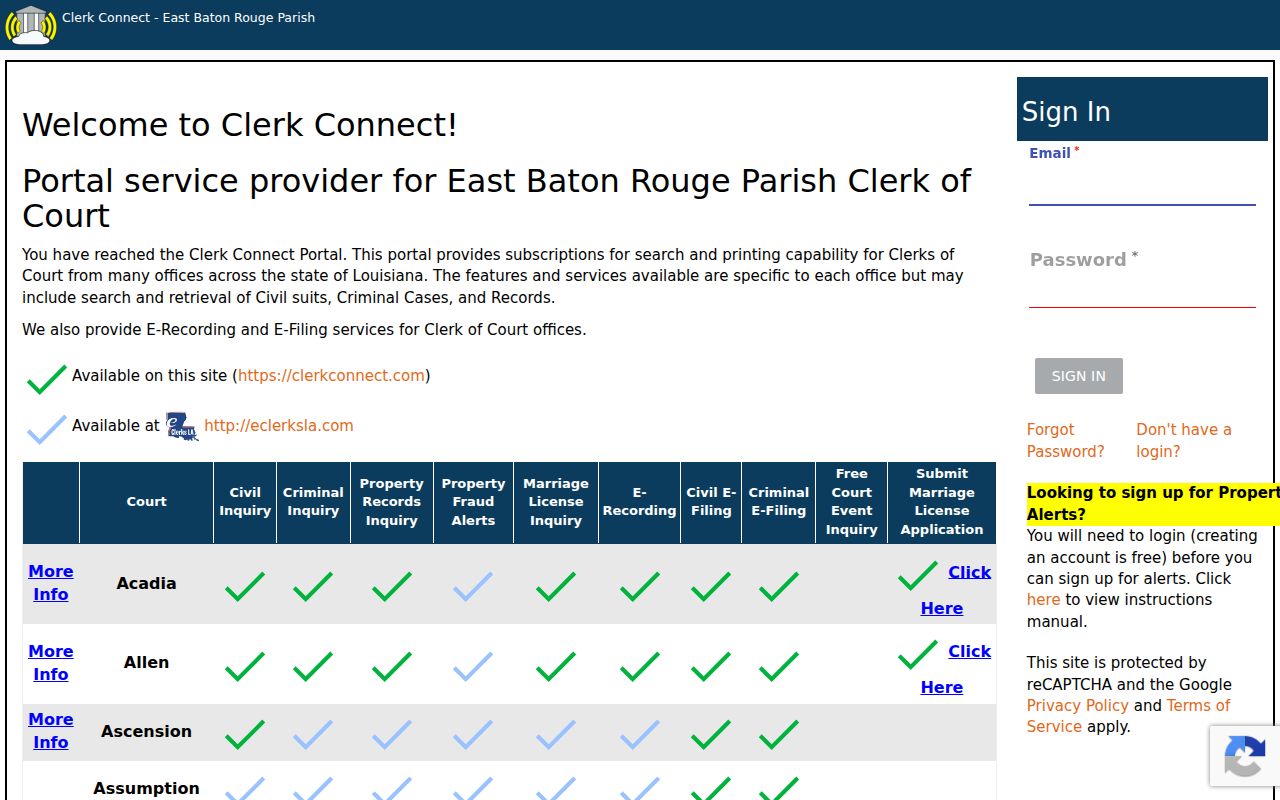
A blocked login does not close the trail. Bring the party name, date range, record type, and format you want to the Recording Department, or email the Clerk's records custodian directly. For deep history, the Archives Department keeps original parish records from 1782, tax rolls through 1872, notarial bundles, and historic court files.
Baton Rouge Court Name Trails
The East Baton Rouge Parish Clerk serves the 19th Judicial District Court and Family Court. A civil name match can surface pleadings, petitions, motions, judgments, or probate filings. A hit does not prove the person lives in Baton Rouge. Check the case type, filing date, party role, docket number, and disposition. Only then should you trust a match. Weigh the name against an independent address, parcel, obituary, or business record.
The civil inquiry portal likewise shows its subscription state.
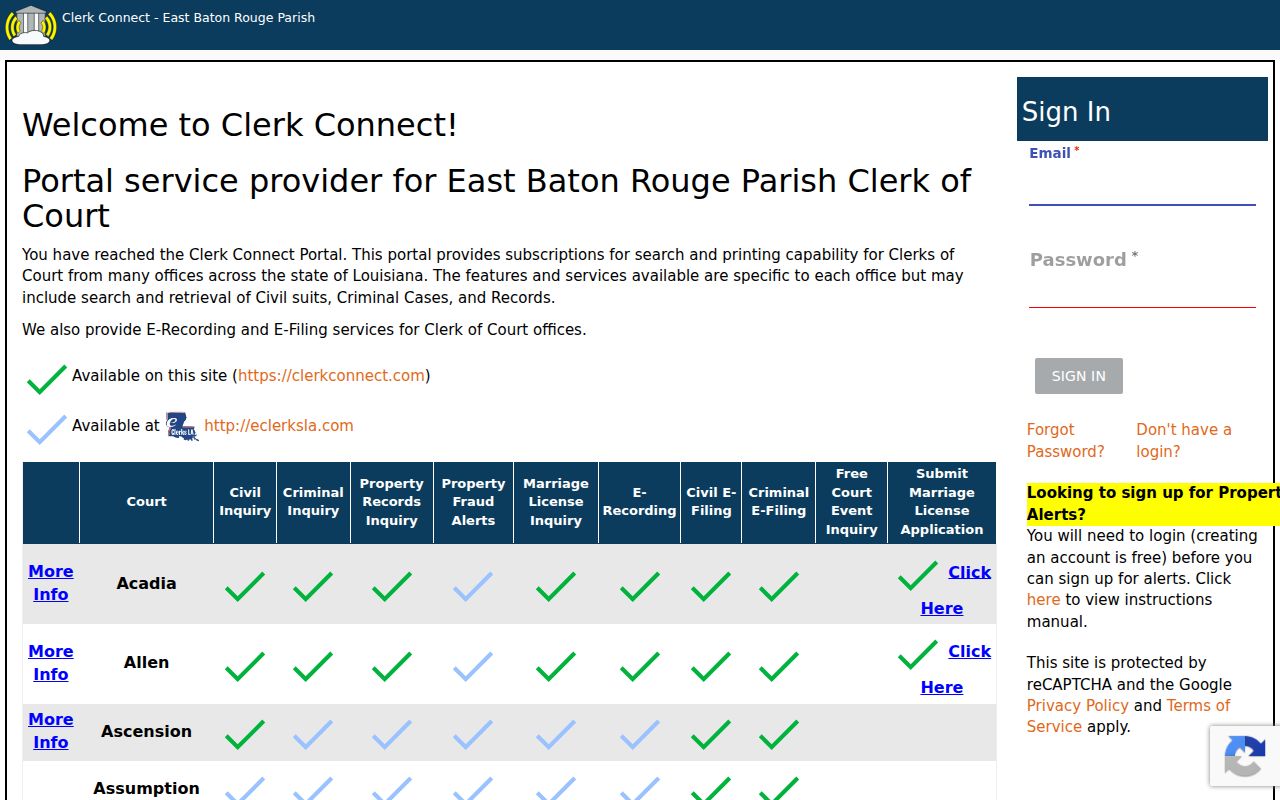
When the online screen runs dry, public viewers can inspect many files at Clerk facilities. Electronic filing started in 2018. The civil department went paperless in 2020, except for probate and certain original documents. Older case-number blocks still live at City Hall or the Archives, so give staff both the number and the record class.
Vital Records Have Closed Doors
Louisiana keeps birth records closed for 100 years and death records for 50 years. Eligible relatives and authorized people may order certified copies through Louisiana Department of Health channels. Mail, in person, and the state's approved online, phone, or fax vendor all work. The East Baton Rouge Clerk handles local walk-in birth certificates and recent death certificates at Downtown City Hall. Its death service only reaches back to June 2012.
Marriage licenses come from the Clerk's Public Service Department. Divorce copies come from the clerk in the parish where the divorce happened. The Louisiana Public Records Law does not override closed-record law. A residents directory lead from an obituary may point to the right event. It never creates eligibility for a certificate.
Lawful use. Use Baton Rouge records for personal research, family history, estate work, civic review, or scam checks. Never use an address to stalk, threaten, or harass anyone.
Business Links, Not Home Proof
The Louisiana Secretary of State Commercial Search ties a person to an entity. The link is as an officer or registered agent. You can search by entity name, charter number, trade registration, name reservation, or officer and agent. Partial names and spelling variants help when a name is uncertain. Louisiana's state license directory then routes you to the right board for a credential check. Each board sets its own fields and status terms.
Inside a Baton Rouge residents directory, these tools are handy cross-checks. They help when the same name appears twice. They prove an organization or license link, not a current home address. Save the entity number, filing name, role, and board result. Then compare them with a dated independent record. For unclaimed property, the Treasury search accepts a name or business name plus city and ZIP. A separate route handles claim status.
Historical Baton Rouge Directories
The Baton Rouge Room and the Genealogy Collection share the second floor of the Main Library at Goodwood. Their local holdings span directories, maps, newspapers, yearbooks, photographs, manuscripts, family histories, and obituary indexes. Public obituary runs are labeled by decade. They run from the 1940s through the 1970s and then 1979 through 1991. Some databases require a library card or an in-library computer. So call the Baton Rouge Room at 225-231-3752 or Genealogy at 225-231-3751 before a long trip.
LSU finding aids confirm Baton Rouge directory references for 1856, 1895, 1899, 1905, and 1906. Those years do not guarantee a complete run or publisher history. A dated entry may list a name, address, phone number, occupation, spouse notation, or business tie. Reverse or criss-cross editions flip an address into an occupant lead. The Baton Rouge city directory page covers the shelf locations, citation method, and census pairing. It does not treat a printed entry as proof of where someone lives today.
Note: Search both old and current street names when a Baton Rouge address appears in the city's dated 1942 street-name-change file.
Request Missing Baton Rouge Records
Plenty of Baton Rouge records still live in drawers rather than databases. Louisiana Public Records Law, La. R.S. 44:1 et seq., lets any adult inspect or copy public records, with certain exemptions carved out. The right of access sits in R.S. 44:31. Custodian duties and copy procedures fall under R.S. 44:32. If a request is denied or delayed, R.S. 44:35 spells out the remedies. The Clerk opens records to public inspection during regular hours and names a custodian for each request.
Write the request before you send it. A good one names the record series, the person or property involved, the date range, and the case or instrument number if you have it. Say what format you want. Ask for a cost estimate on any large file. When staff say a record is in active use or stored offsite, ask which building holds it and when it will be free. For old directories and archival material, try the library or the Louisiana State Archives rather than the Clerk.
Route each request to the right keeper. Recording staff can search an ORIGINAL AND BUNDLE number, a party name, or the Vendee/Vendor index used for conveyances. Civil staff do best with a case number, since older civil, family, and probate ranges sit in separate buildings. Archives staff can dig into original parish records and notarial bundles when a modern portal has no published cutoff. For a city directory edition, obituary index, yearbook, newspaper, or Sanborn map, the library is the better stop. Give staff the name, the address, and a likely year. Then ask whether the item is online, on microfilm, or reading room only.
Official rolls take more effort than a broad commercial search, but their limits are honest ones. Each one names its custodian, the record type and date, and a path to a copy or a correction. Commercial results can blend stale addresses with same-name strangers. Confirm every key fact at its source before you rely on it.